


FILLING THE VATS WITH MILK: READY TO GO
We pasteurise the milk as it flows from our receiving tanks into the vats in our cheese rooms each morning. This is vital to start the process off right and begins at 5am everyday as we prepare our vats for the day's make.
COAGULATION: FORMING THE CURD
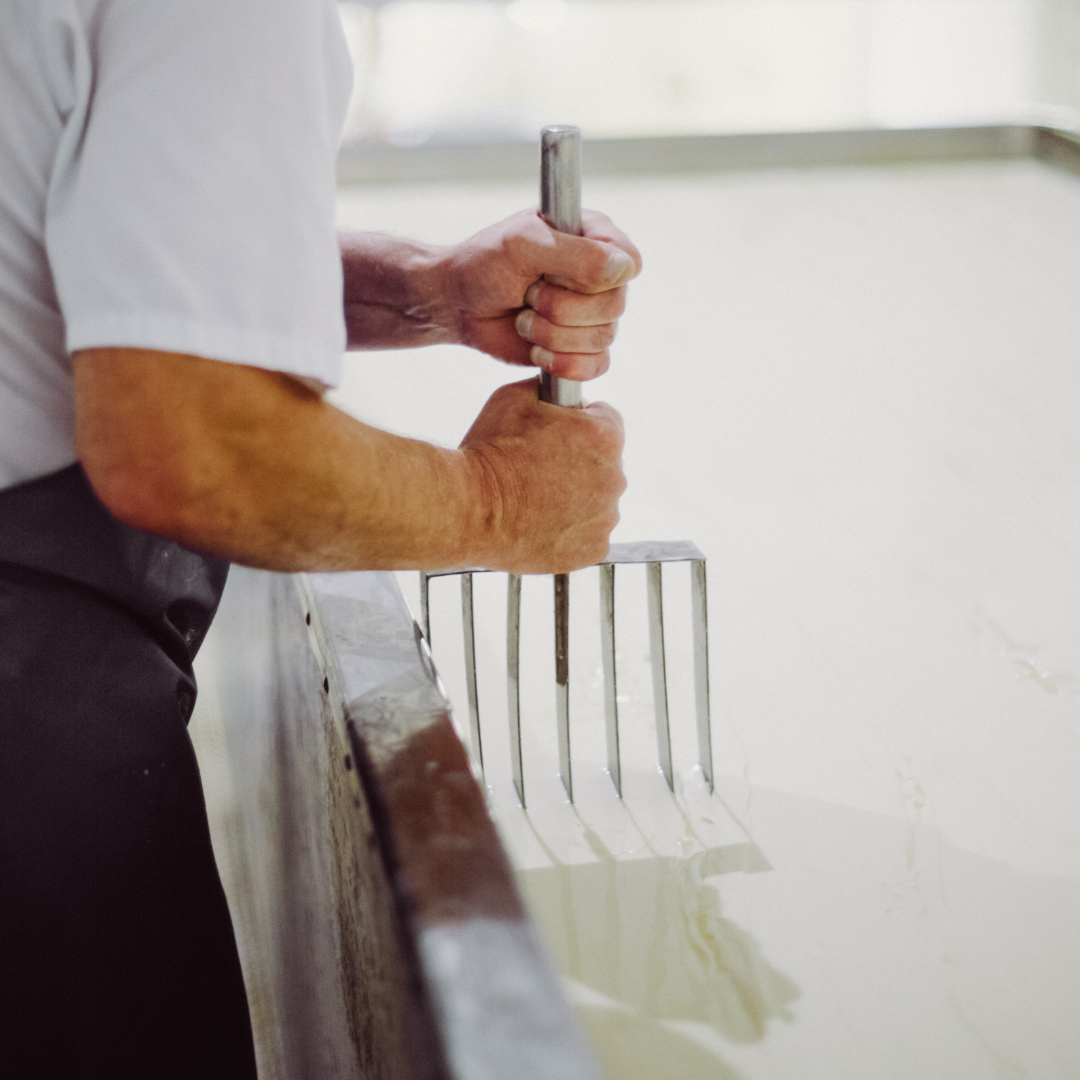
With the addition of an enzyme called rennet, the solids in the milk begin to come together and form to the consistency of a perfectly set yoghurt. All of our cheeses are made using a vegetarian rennet here.
DRAINING: RELEASING THE WHEY
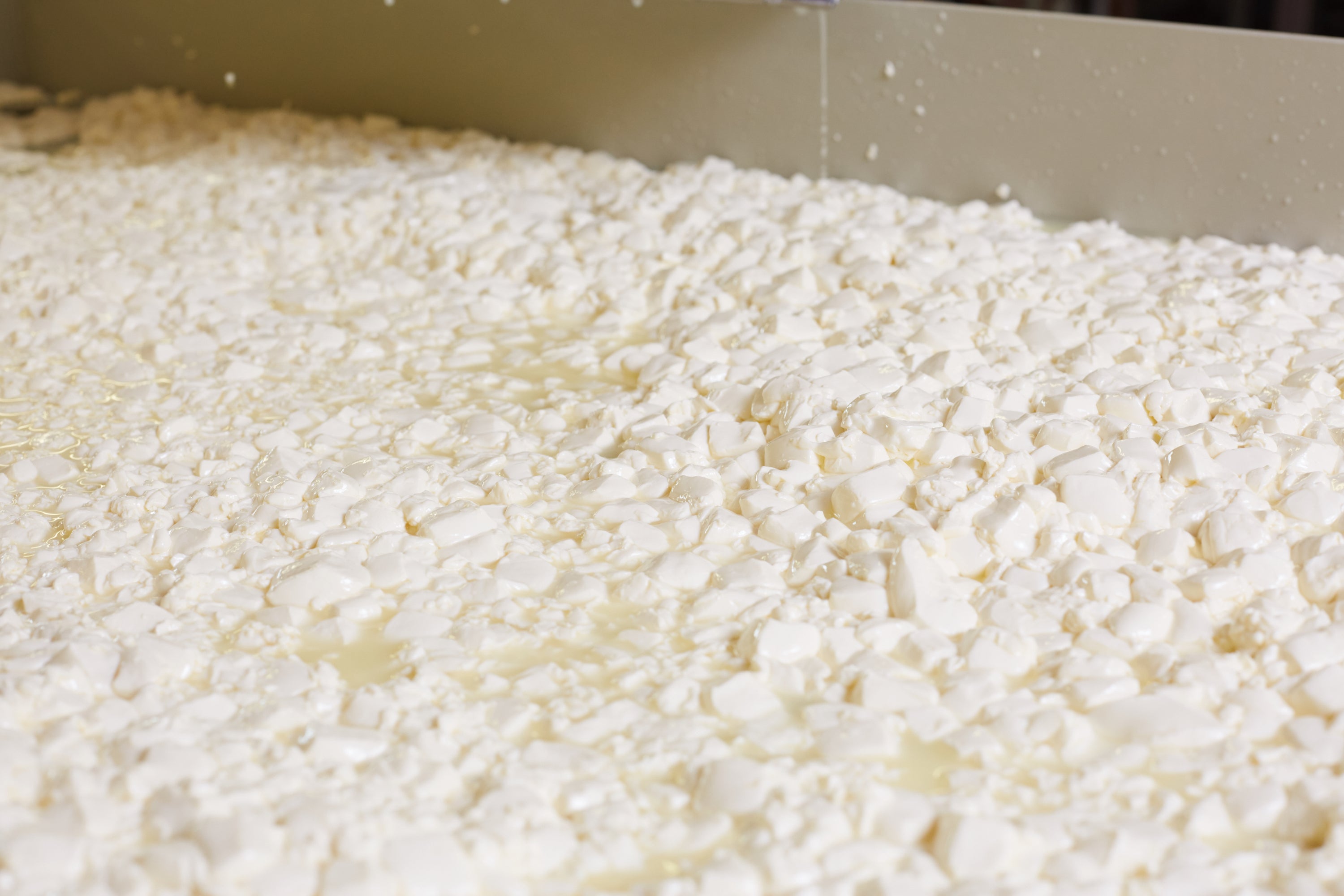
Once the curd has been gently hand-cut, we empty the vats, allowing gravity to guide the silky curds and whey naturally into their moulds.
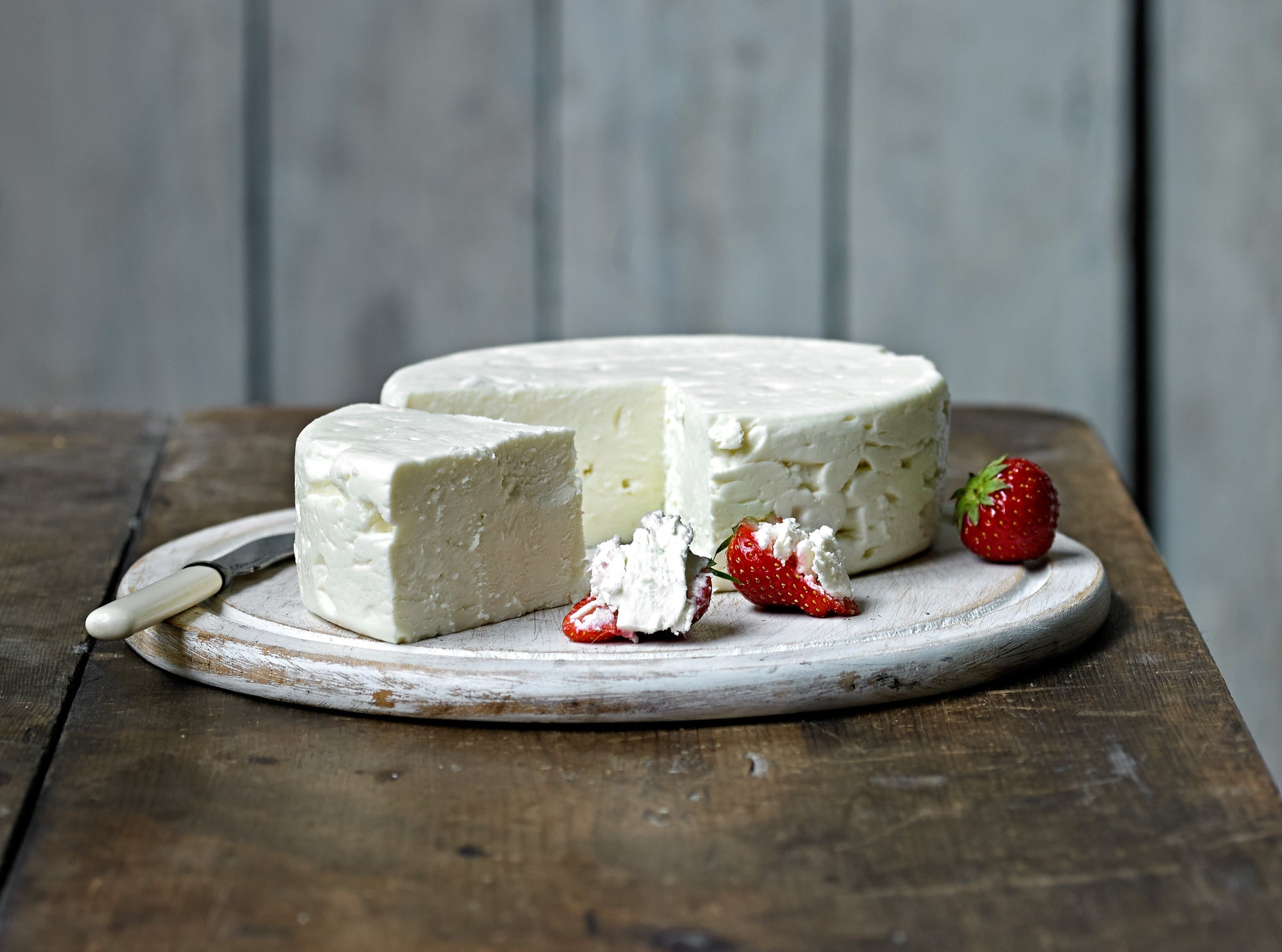
At this stage, we begin the careful process of draining the whey, delicately separating it from the curds. The amount of whey retained depends on the cheese being crafted; less moisture for Mrs Bell's Salad Cheese to achieve its characteristic crumbly texture, more for our Bluemin Whites to create a deeply creamy, unctuous centre.
The whey that's left behind doesn't go to waste. Ours is collected by a local farmer and repurposed to generate electricity through an anaerobic digester, a sustainable partnership that ensures every part of the milk has purpose.
THE FIRST TURN: TIME FOR ‘BRIAN’ TO STEP UP
With the curds safely in their moulds, they being to gradually settle under their own weight, pushing out the whey and beginning to gain solidity.
As excess moisture drains away, we wait for the right moment to initiate the important first turn. This part of the process is much improved thanks to an ingenious bit of kit, a "turner", that we have named Brian after the famous Yorkshire chef :)

RIPENING: CREATING CHARACTER
Our blue cheeses are now stowed away in our ripening stores, where their distinctive natural rinds begin to form. This carefully controlled environment, with its elevated humidity and gentle warmth, nurtures the development of the cheeses.

FOILING: A SHIELD OF PERFECTION
Why do we wrap our blue cheese in foil? Well, it serves multiple purposes. The foil expertly moulds to the cheese, creating a breathable seal. It facilitates even ripening by efficiently conducting the heat generated during the cheese's development. It's also eco-friendly, as it can be recycled.
TURNING: STRIVING FOR BALANCE
Our cheeses retain moisture and so regular turning is vital. By carefully rotating them, we ensure that the consistency throughout each one remains the same. This is a vital part of the process as the cheese ripens, and initially we turn them daily before transitioning to weekly turns as they mature.

GRADING: REACHING OPTIMAL FLAVOUR
Determining the perfect moment for each cheese to be deemed mature requires our skilled grading process. Just like fine wine, each batch develops uniquely, boasting its own nuances. It is our duty to make the call at the right moment to grade our cheeses and judge if they are ready for dispatch.